


Forged UTV wheels offer a performance advantage
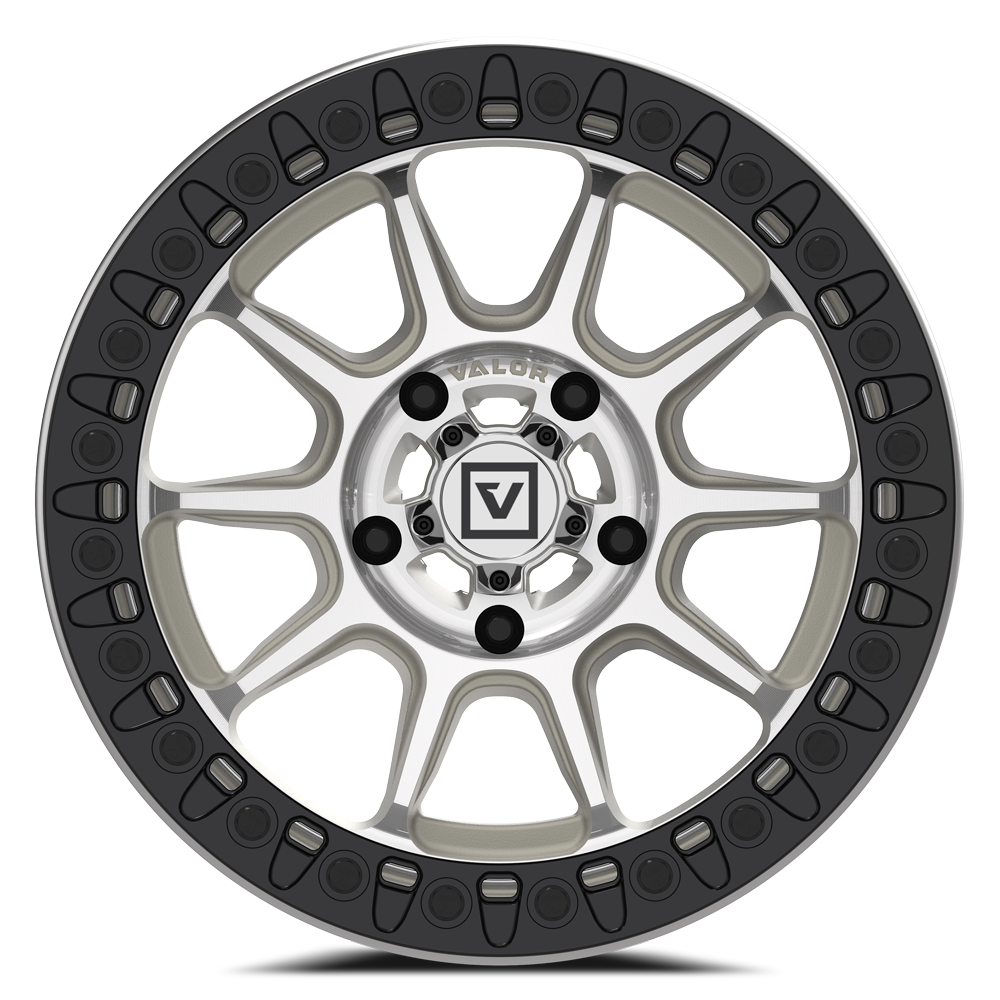
Forged UTV wheels offer their biggest advantage when your top-end sport UTV or SXS demands both strength and low weight. A properly engineered forged wheel can provide the required load capacity with less material than a comparable cast design, helping reduce unsprung mass (the weight the suspension must control as the tire moves over rocks and ruts). Lower wheel mass can also reduce rotational inertia, easing acceleration and braking demands (which equals lower maintenance bills). Those benefits make forging attractive for demanding trail and race builds. Within our collection, the low-pressure cast V13 and flow-formed V09 and V18 provide useful reference points for understanding how manufacturing processes affect wheel performance.

The forging advantage begins inside the aluminum. A heated solid billet is pressed into a wheel blank, plastically working the metal before heat treatment and machining create the finished product. This process can reduce internal voids and develop directional grain flow. Picture elongated grain regions in the worked metal rather than the unworked solidification structure of a casting. Combined with a suitable alloy and heat treatment, that structure can provide better ductility and fatigue resistance, helping the wheel tolerate impact loads and repeated loading cycles. The benefit reaches the forged hub and spoke material as well as the rim. Final grain shape varies with processing, so the drawings show principles rather than literal micrographs.


Flow forming brings some of that metalworking benefit to a cast wheel’s barrel. Several of our wheels utilize the flow-forming process, including the V09, V16, and V18. The process starts with a cast preform with a short, thick rim section. See the image above and notice the short barrel on these stacks of V09 preforms. Rollers press against a heated, spinning preform, spreading the malleable material into a thin barrel. If you were looking at a simplified cross-section of a flow-formed wheel, you would see a cast texture grain at the hub and spokes, transitioning to stretched, forged-like features in the worked barrel.

Low-Pressure Die Casting remains a practical way to build a durable UTV wheel at a lower cost, and the casting method matters. Gravity casting relies on gravity to fill a mold with molten aluminum. Low-pressure gravity casting, used for our V13, pushes the molten metal (shown as red in the image above) into the mold (D) under controlled air pressure as it solidifies. That controlled filling and feeding can reduce trapped gas and shrinkage porosity compared with basic gravity casting. Low pressure casting improves control over defects; it does not turn a casting into a forging. Grain size depends on cooling and alloy chemistry, while heat treatment further changes the microstructure.
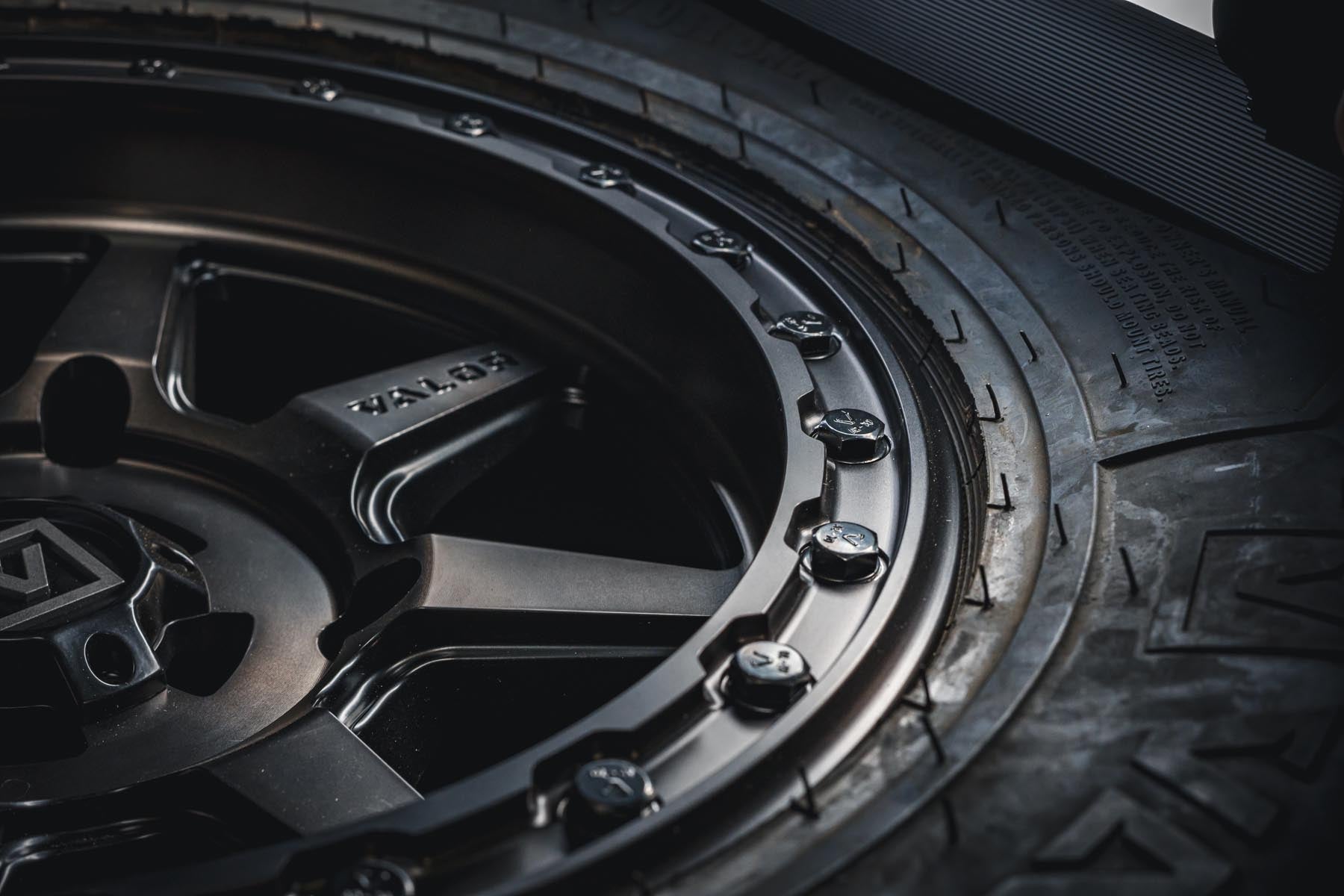
The strongest case for paying more for a forged wheel is when reducing wheel weight while preserving a required strength margin is a priority. Casting is usually less expensive, and flow forming offers a useful middle ground by concentrating extra processing on the barrel. A forged wheel is not automatically lighter or higher rated than every flow-formed or cast wheel, and a forged beadlock ring does not make the wheel body fully forged. For your UTV, choose the construction that meets your load, terrain, fitment, and budget requirements.