



Sticky vs. Medium-Compound UTV Tires: Choosing the Right Rubber for Rock Crawling
When traction matters, few upgrades make a bigger difference than switching to a sticky-compound UTV tire. Designed specifically for technical terrain, sticky tires commonly feature a durometer rating in the 50s—significantly softer than the medium compounds typically used in traditional all-terrain UTV tires, which often measure in the 60s. That difference may appear small on paper, but it can dramatically affect how a tire conforms to rocks, maintains grip and responds to precise throttle inputs.

What Does Tire Durometer Mean?
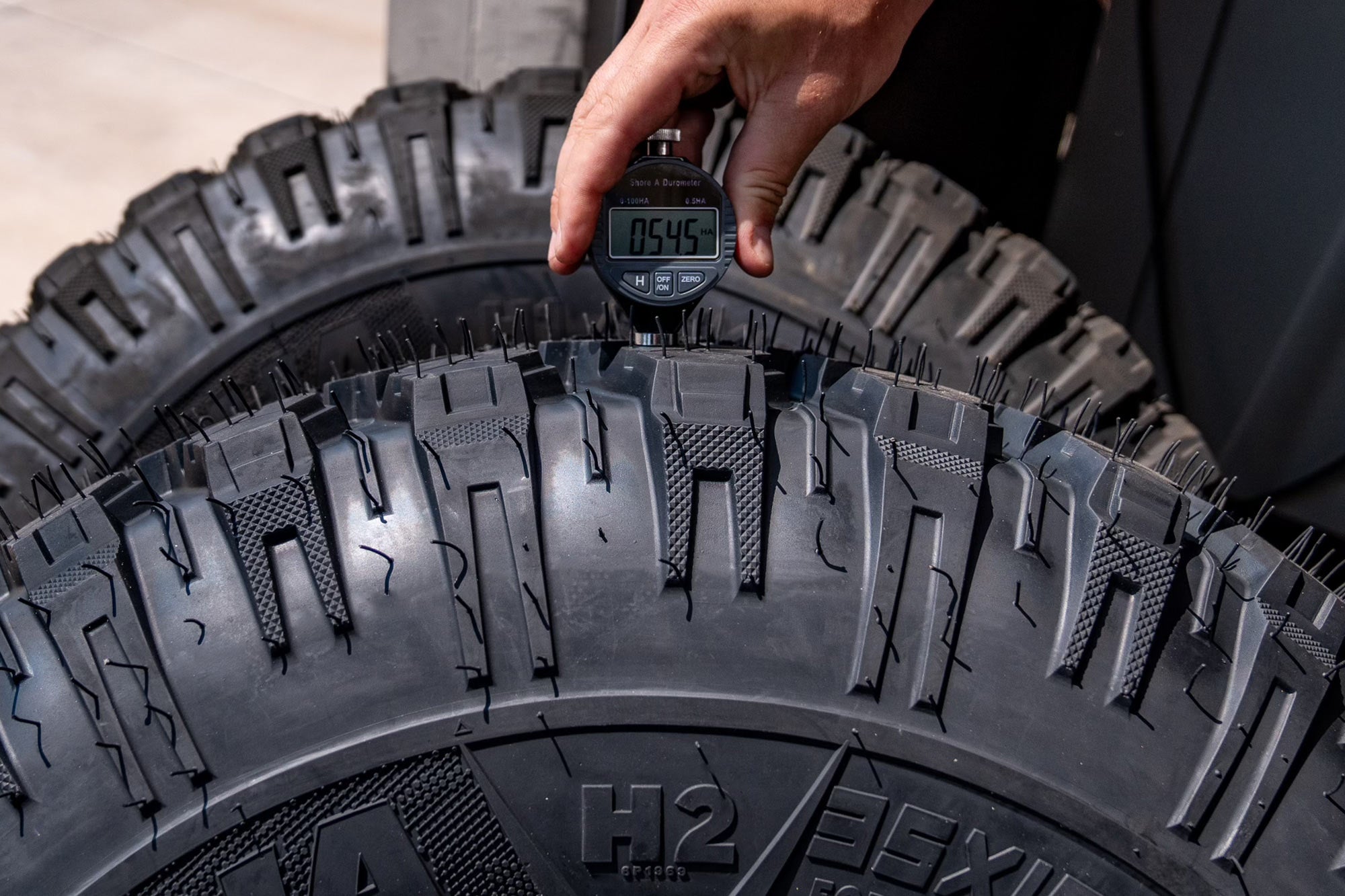
Durometer is a measurement of rubber hardness, commonly expressed using the Shore A scale. A lower number generally indicates softer, more flexible rubber, while a higher number represents a firmer compound.
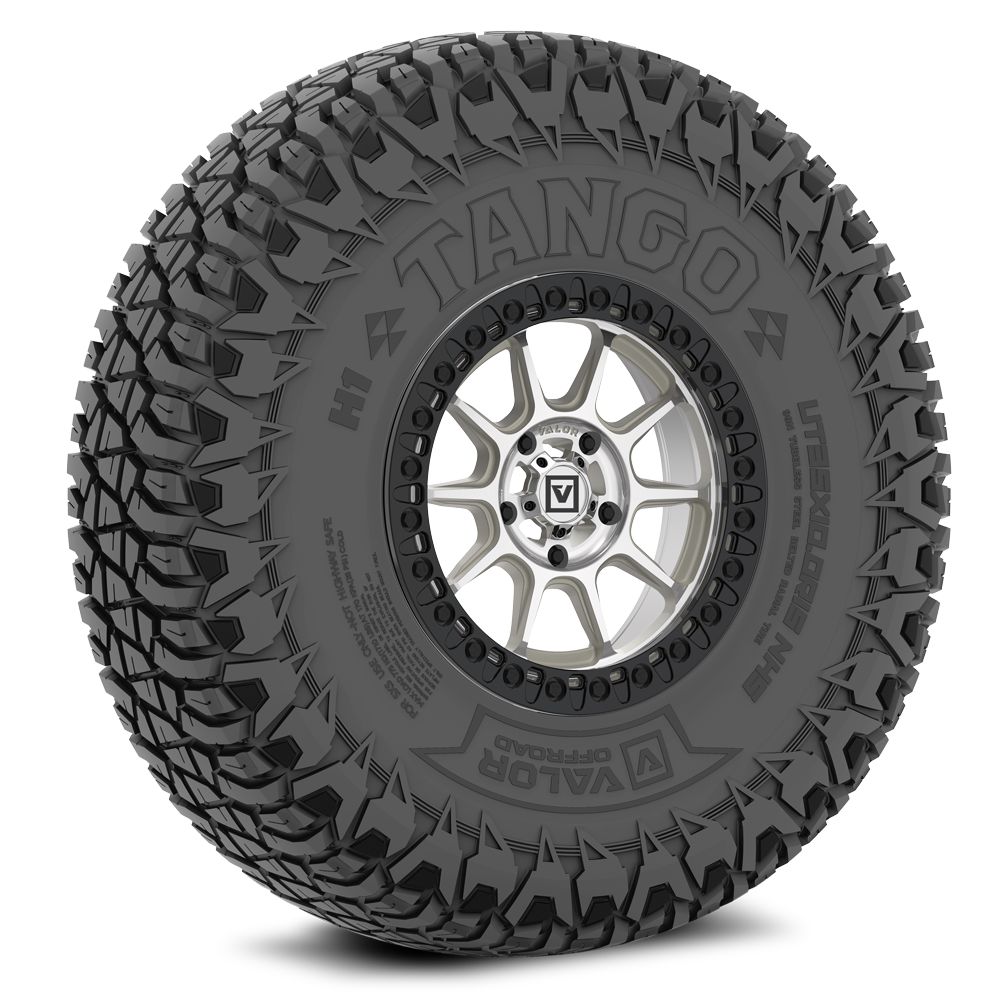
For example, our Alpha UTV Tire is available in two durometer ratings: H1 (65A) and a much lower H2 (55A), specifically developed for rock crawling. The Tango tire is available only in H1 (65A).
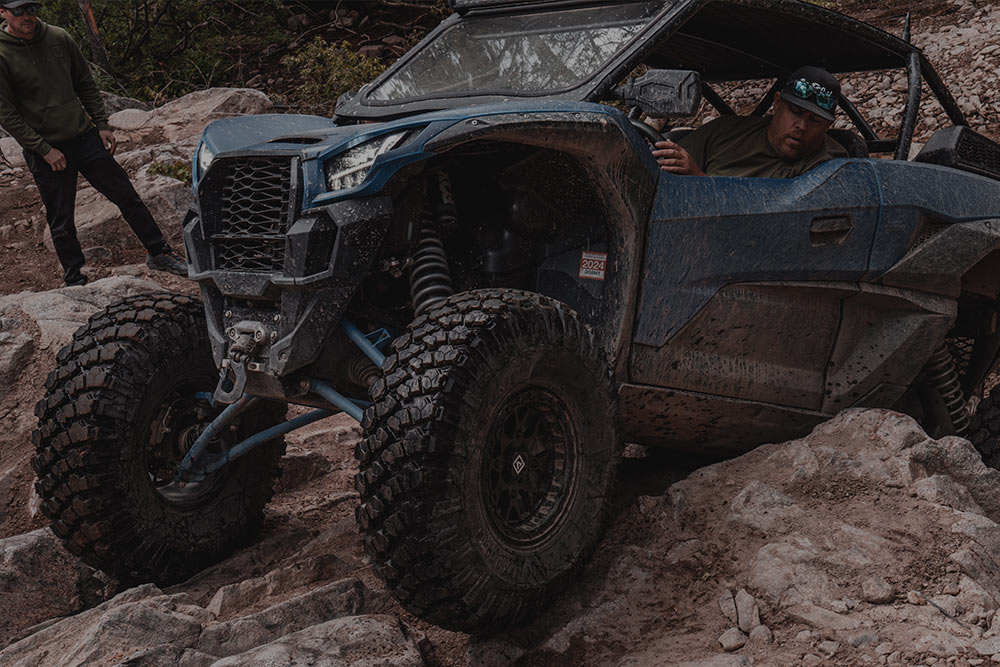
A sticky-style UTV tire with a durometer rating in the 50s can deform more readily around uneven rock surfaces than a medium-compound tire in the 60s. Instead of resting primarily on the highest points of the terrain, the softer tread can wrap around ledges, cracks, and irregular rock faces, creating a larger and more effective contact area.

Greater Mechanical Grip on Rock
The primary advantage of a sticky compound is improved grip. Softer rubber conforms more closely to the texture of stone, helping the tread blocks engage with small surface irregularities that a harder compound might slide over.
This is especially valuable when climbing smooth slabs, navigating exposed ledges, or crawling over large boulders. The additional grip can help the vehicle maintain forward progress with less wheelspin, even when tire placement or weight distribution is less than ideal.
Better Conformability at Low Pressure
Rock crawlers frequently reduce tire pressure to enlarge the contact patch and allow the tire to conform to obstacles. A softer compound complements this strategy by making the tread surface more flexible.
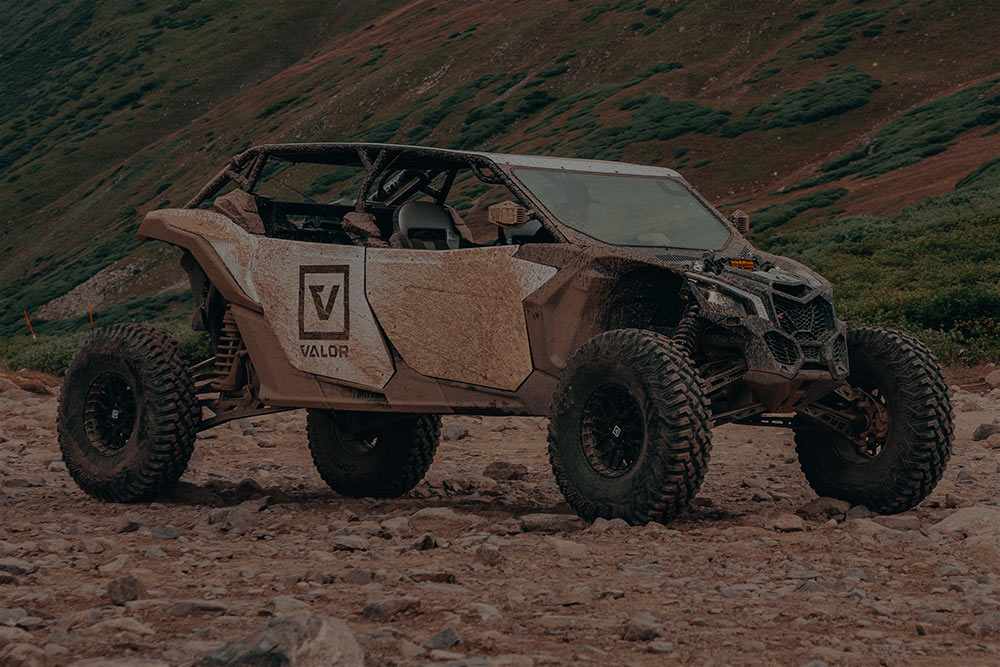
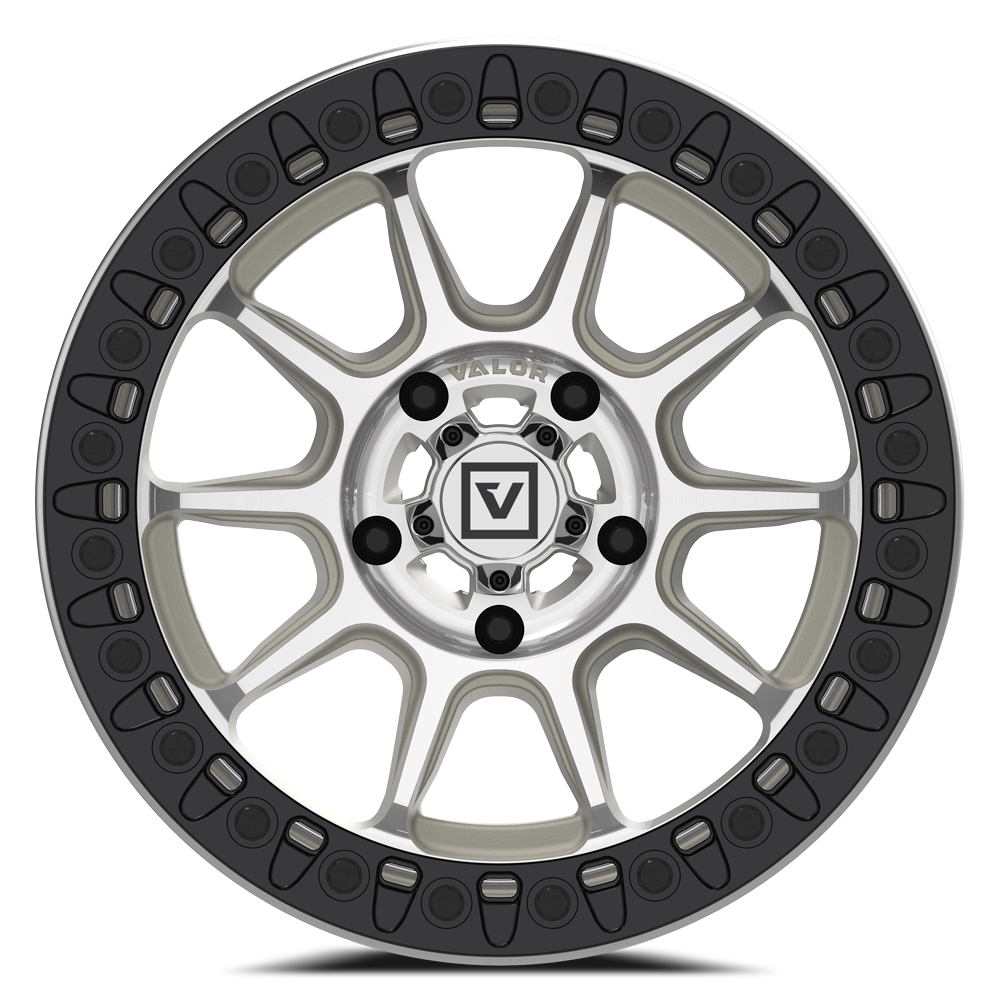
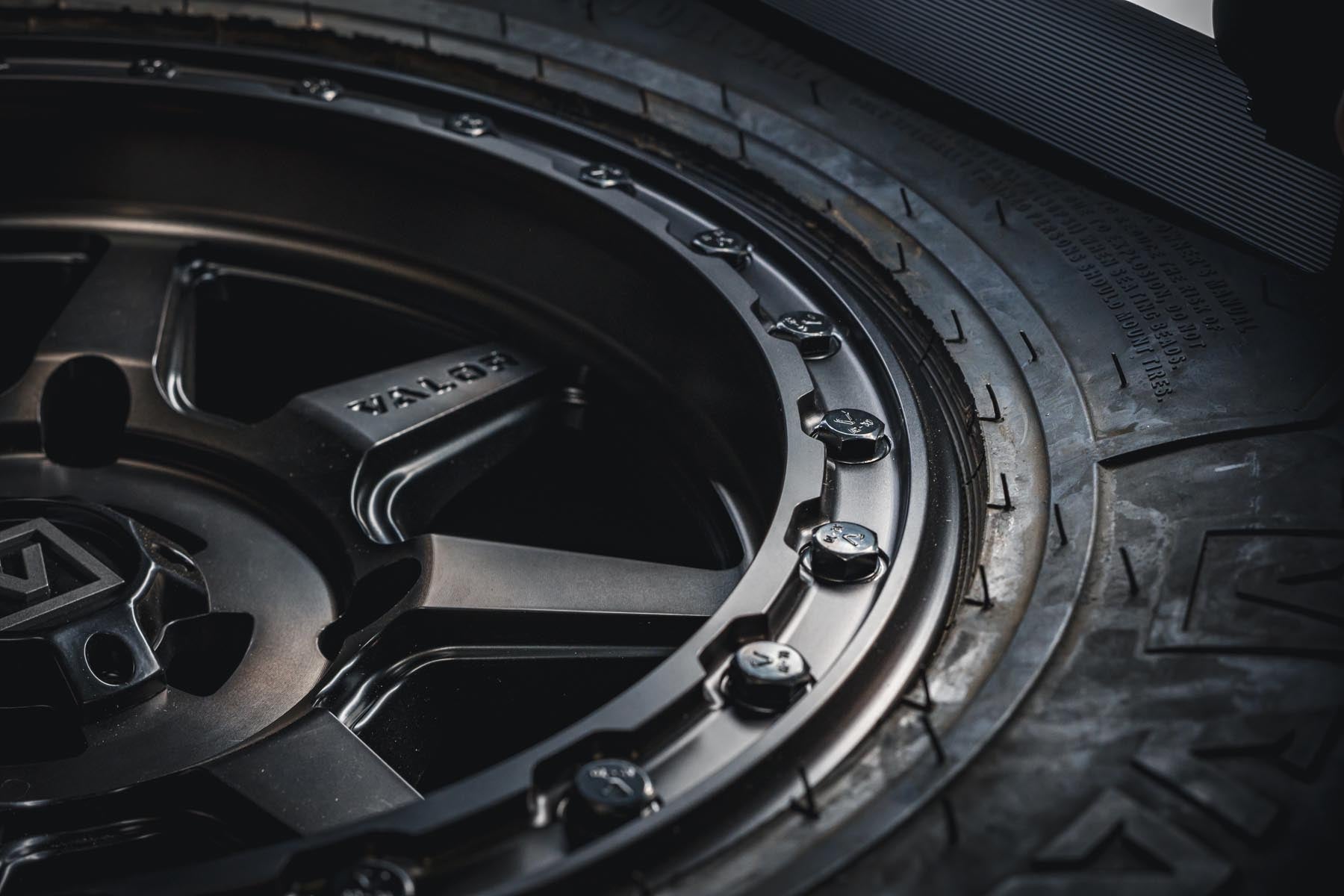
When paired with a Valor Offroad beadlock wheel, a sticky tire can mold itself around rocks rather than bounce or skate off them. This increases the number of tread elements contacting the terrain and can improve traction during slow, controlled maneuvers (extremely helpful in extreme rock crawling).
Tire pressure should never be reduced blindly; always use a quality gauge.
More Control With Less Wheelspin
Rock crawling is built around precise throttle control. Excessive wheelspin can make your vehicle unsafe, damage the trail, and create sudden changes in traction. A sticky tire’s softer rubber can generate grip with less rotation, helping the driver climb obstacles more deliberately.
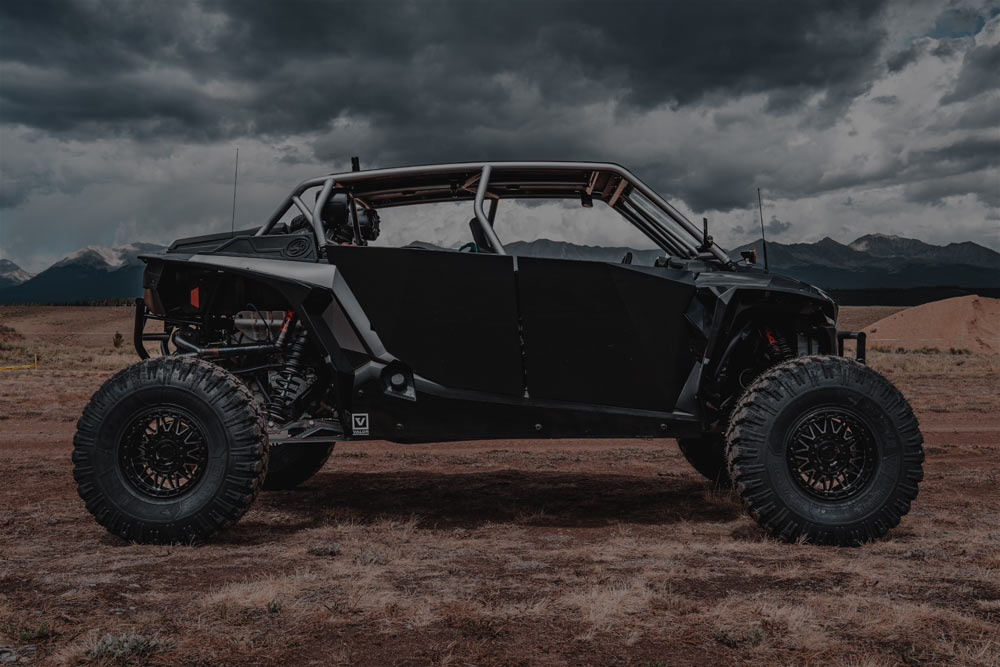
Reduced wheelspin may also lessen shock loading when a spinning tire suddenly finds traction. Sticky tires can transmit greater forces into axles, differentials, CV joints, and steering components. Smooth throttle application remains essential, particularly on high-horsepower vehicles such as the Polaris RZR Pro R, Can-Am Maverick R, and Kawasaki Teryx H2.
Improved Grip on Ledges and Off-Camber Terrain
Sticky compounds are especially useful when only part of the tire is contacting the obstacle. On a sharp ledge or off-camber rock face, the softer tread can flex and maintain contact as the vehicle’s suspension moves.
This predictable grip can help the driver maintain a chosen line rather than slide sideways toward a less desirable route. Although no tire can replace proper spotting and vehicle control, increased tread compliance can provide a valuable margin of confidence in technical terrain.

Why Medium Compounds Work Better for All-Terrain Riding
A medium-compound tire with a durometer rating in the 60s is often the more practical choice for mixed recreational use (road and trail use). Firmer rubber typically resists wear better during extended trail riding, on hard-packed terrain, and at higher speeds.
Medium compounds may also provide more stable tread-block behavior under braking and cornering. Because the rubber flexes less, the tire can feel more precise during faster transitions and generate less heat during long-distance operation.
For riders who regularly encounter dirt, gravel, mud, sand, and occasional pavement, a medium compound generally offers a better balance of traction, durability, and predictable handling.
The Tradeoffs of Sticky UTV Tires
The same softness that improves rock traction also creates compromises. Sticky compounds generally wear faster, particularly when used on pavement, sharp gravel or hard-packed trails at speed. Aggressive throttle can tear or round tread-block edges more quickly than it would on a medium-compound tire.
Other potential tradeoffs include:
- Shorter tread life
- Greater susceptibility to chunking in abusive conditions
- Less precise handling at higher speeds
- Increased heat generation
- Greater rolling resistance
- Potentially higher replacement costs
Sticky tires can also feel different as temperatures change. A softer compound may become more flexible as it heats up and firmer in cold conditions, although the degree of change depends on the specific rubber formulation.
Which Compound Is Right for You?
Choose a sticky-style UTV tire in the 50+/- durometer range when your priorities include technical rock crawling, low-speed traction, obstacle control, and maximum grip on stone. It is best suited to riders willing to accept faster wear in exchange for increased performance on demanding terrain.
Choose a medium compound in the 60+ durometer range when your UTV sees varied trails, longer distances, and higher average speeds. It is usually the better option when durability, handling consistency, and all-terrain versatility matter more than specialized rock traction.

Sticky UTV tires are purpose-built tools. Their lower durometer allows the tread to conform to rock, expand the effective contact area, and generate impressive traction at low speeds. For dedicated rock crawlers, that added grip can transform how confidently a vehicle approaches ledges, slabs and technical obstacles.
A medium compound remains the most versatile choice for traditional trail riding. The best tire is not necessarily the softest one—it is the compound, construction and tread design that most closely match the terrain, speed and type of riding the vehicle will encounter.