

Understanding Tire Durometer and Valor Offroad H1 and H2 Compounds
Choosing a tire means looking beyond tread pattern and size. The rubber compound also affects how a tire grips the terrain and how it wears over time. That is where a durometer rating becomes useful. It gives you a consistent way to compare rubber hardness and helps explain why two tires with similar tread can feel different on the trail.
At Valor Offroad, our H1 compound is rated between 60-69 Shore A, while our softer H2 compound is rated between 50-59 Shore A. Not sure what Shore A is? We'll explain later. The H1 compound balances traction with durability for varied trail riding. The H2 compound puts a greater emphasis on grip for technical rock crawling. Understanding those numbers can help you choose a compound that suits the riding you actually do.
What a tire durometer rating measures
A durometer is the instrument used to measure how strongly a material resists indentation. In everyday tire conversations, people also use the word to describe the hardness reading itself. The instrument presses a small, spring-loaded tip, called an indenter, into the rubber. Softer rubber lets the tip penetrate farther and produces a lower reading. Harder rubber resists penetration and produces a higher reading.

Shore hardness scales run from 0 to 100. These are hardness readings, not measurements in pounds, pressure, or a unit called a durometer. The scale designation belongs with the number, so for example: 65 Shore A, often written as 65A, tells you more than simply saying a tire is a 65.
Why Valor Offroad uses the Shore A scale
Different Shore scales suit different materials. Shore A covers many flexible rubbers and elastomers, including tire tread compounds. Shore D is used for harder materials, such as rigid plastics and harder elastomers. Other scales serve very soft materials, including some foams and gels. The scales use different indenter designs and applied forces, so their numbers are not interchangeable. A reading of 65 Shore A is different from 65 Shore D. Valor Offroad tire durometer specifications only use Shore A.
A compound is more than its hardness number
A rubber compound is a formulation developed to produce certain performance characteristics. Its ingredients and manufacturing process influence how it behaves. Durometer describes one result of that formulation: resistance to indentation.
It does not measure traction directly. Two compounds with the same Shore A rating can still behave differently because of their chemistry and response to heat and repeated deformation. Tread design, tire construction, and the surface under the tire also affect performance. Use hardness as a helpful comparison point within a broader tire selection, rather than a complete grip score.
H1 at 65 Shore A for balanced trail performance
Our H1 compound is the balanced option in the Valor Offroad lineup. Its 65A rating makes it firmer than our H2, emphasizing a balance of useful grip and unmatched tread life. It is a practical starting point for riders who cover varied terrain and want one setup for regular weekend use.
If your rides involve long stretches of hardpack, connecting trails, and occasional technical sections, that balance matters. You may need traction on an obstacle, but you also spend much of the day putting miles on the tires. For that kind of use, we recommend our H1.
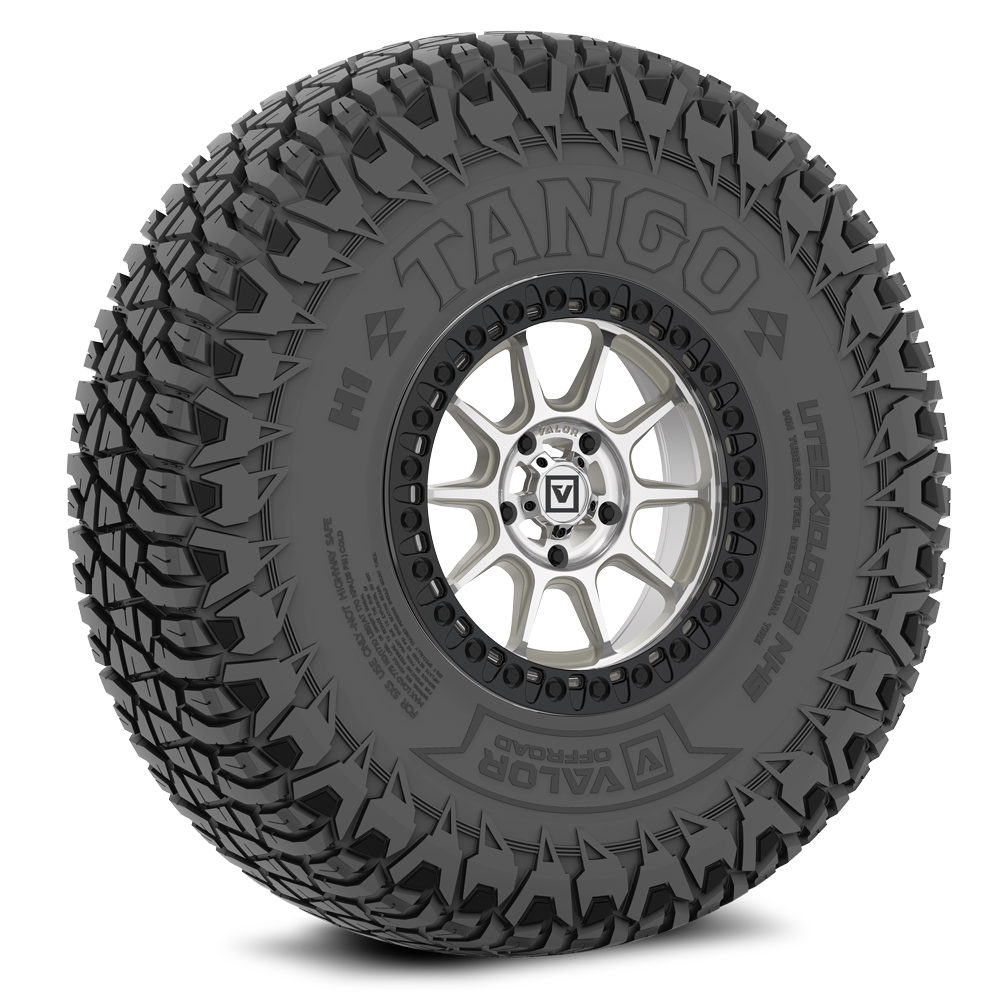
The TANGO® uses H1, while the ALPHA® offers H1 alongside its H2 option in select fitments. The ECHO® is available in H2. Sharing a hardness designation does not make different tire models identical; their tread patterns and construction still largely determine the way they perform.

H2 at 55 Shore A for technical rock crawling
Our H2 compound is the softer option, rated at 55A. It is developed for riders who prioritize technical obstacles, rock crawling, and grip on demanding surfaces. Softer tread rubber can conform more readily to surface texture, which is useful when working across rock faces and ledges at a controlled pace.
Think about a climb where maintaining contact matters more than covering distance. A compound chosen for that use can help the tread work against the rock as the tire loads and deforms. H2 is worth considering when obstacles are the reason for the ride.
That focus brings a wear tradeoff. Riders choosing H2 should generally expect to give up some tread life compared with H1 under comparable use. Its softer rating also does not promise traction on every surface. Loose debris, moisture, vehicle setup, and driving technique still affect whether a tire grips.

Comparing H1 and H2
|
H1 Compound |
H2 Compound |
|
|
Published hardness |
65 Shore A |
55 Shore A |
|
Relative feel |
Firmer and balanced |
Softer |
|
Primary emphasis |
Trail grip and durability |
Technical crawling grip |
|
Riding priority |
Varied terrain and longer rides |
Rock obstacles and controlled crawling |
|
Wear expectation |
Greater emphasis on tread life |
Grip priority with a tread-life tradeoff |
Compound emphasis and published hardness are based on Valor Offroad specifications.
How compound choice affects tire wear
Hardness helps explain the intended balance between grip and wear, but it cannot predict a tire's lifespan on its own. A tire used for controlled trail riding experiences different conditions from one repeatedly spinning against abrasive rock. Load, inflation pressure, terrain, and driving style (experience) all matter.
For a useful comparison, consider the same tire model and size under similar conditions. Comparing one rider's H1 mileage with another rider's H2 mileage on different terrain leaves too many variables. Choose the compound around your priorities, then monitor tread condition and wear during use. A hardness reading alone cannot establish when a tire needs replacement.
Why temperature and testing technique matter
Rubber hardness readings change with temperature. A tire sitting in direct sun can read softer than an otherwise similar tire sitting in the shade. A tire measured immediately after riding can also produce a different result from one that has cooled. That is why a published compound rating should be compared with readings taken under controlled, comparable conditions. We recommend measuring when your tire is cold (cool or not yet used) and in the shade.
Testing technique matters too. A durometer needs proper contact with the sample, and the surface needs enough thickness and support for the method being used. Curved tread blocks, nearby edges, uneven surfaces, and inconsistent reading times can distort the result. A quick handheld check on a mounted tire is useful for comparison, but it is not automatically equivalent to a standardized material test. Use the same suitable Shore A instrument and consistent test locations, record several readings, and follow the gauge manufacturer's procedure.
Rubber hardness and inflation pressure affect different things
Inflation pressure changes how the tire supports a load and deforms against the ground. Tire construction also influences that movement. The tread compound's Shore A rating describes the rubber's indentation hardness; it does not describe the stiffness of the complete tire. Lowering pressure does not turn an H1 compound into H2. A softer tread compound also does not, by itself, establish a tire's puncture resistance, load capacity, or speed capability.

Choosing a compound for your next set of tires
Start with the terrain and riding pace that make up most of your time behind the wheel. Our practical recommendation is H1 when varied trail use and durability lead your priorities. Consider H2 when technical crawling is the main focus, and you accept the wear tradeoff. A single difficult obstacle on an otherwise long trail ride may not justify choosing your entire setup around the softest option.
Explore the Valor Offroad tire collection and compare your preferred size, construction, tread pattern, and compound together. If you are deciding between H1 and H2, tell our team what you drive, where you ride, and how you use it so we can help narrow the choice: (602) 935-0009