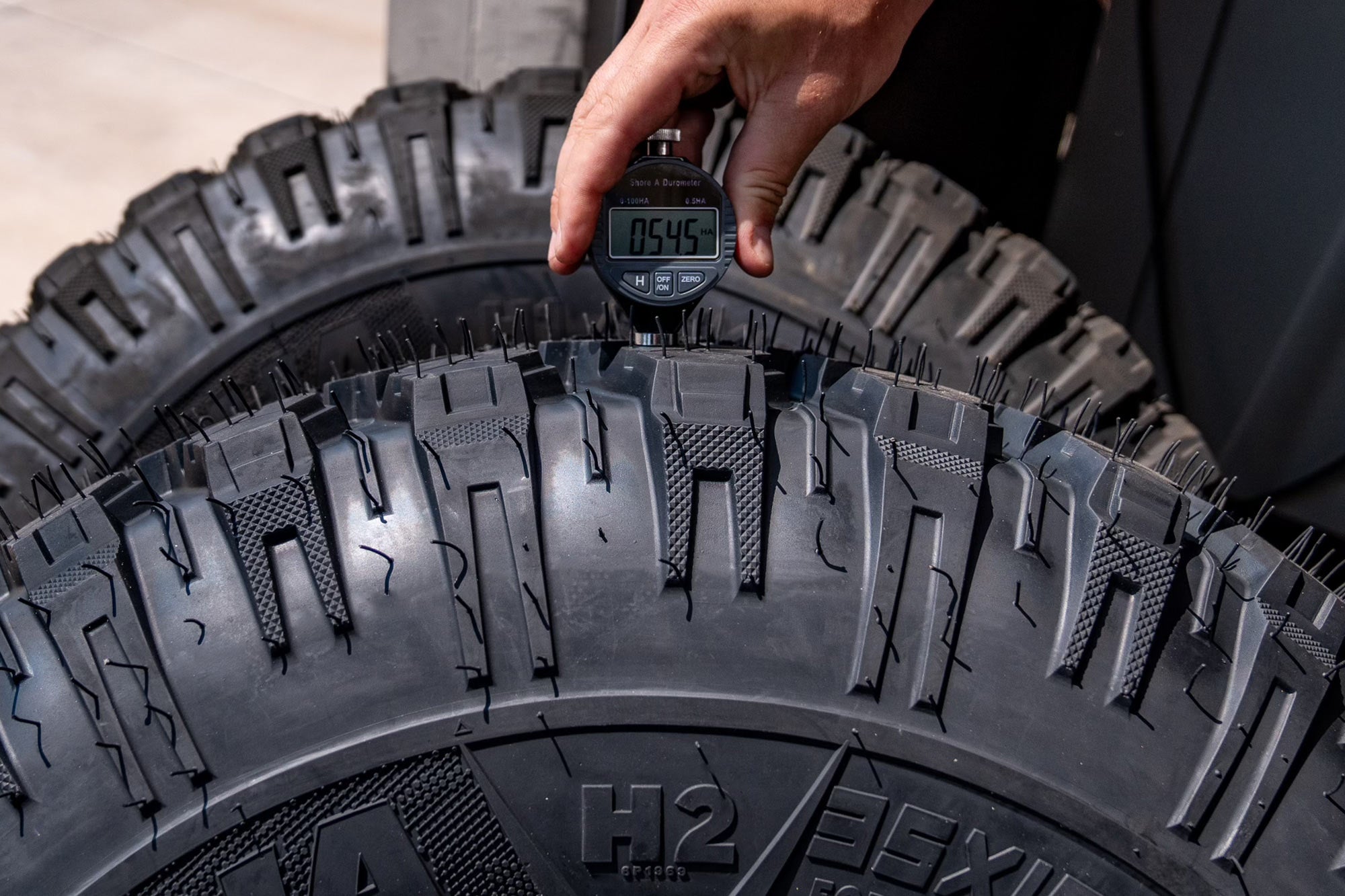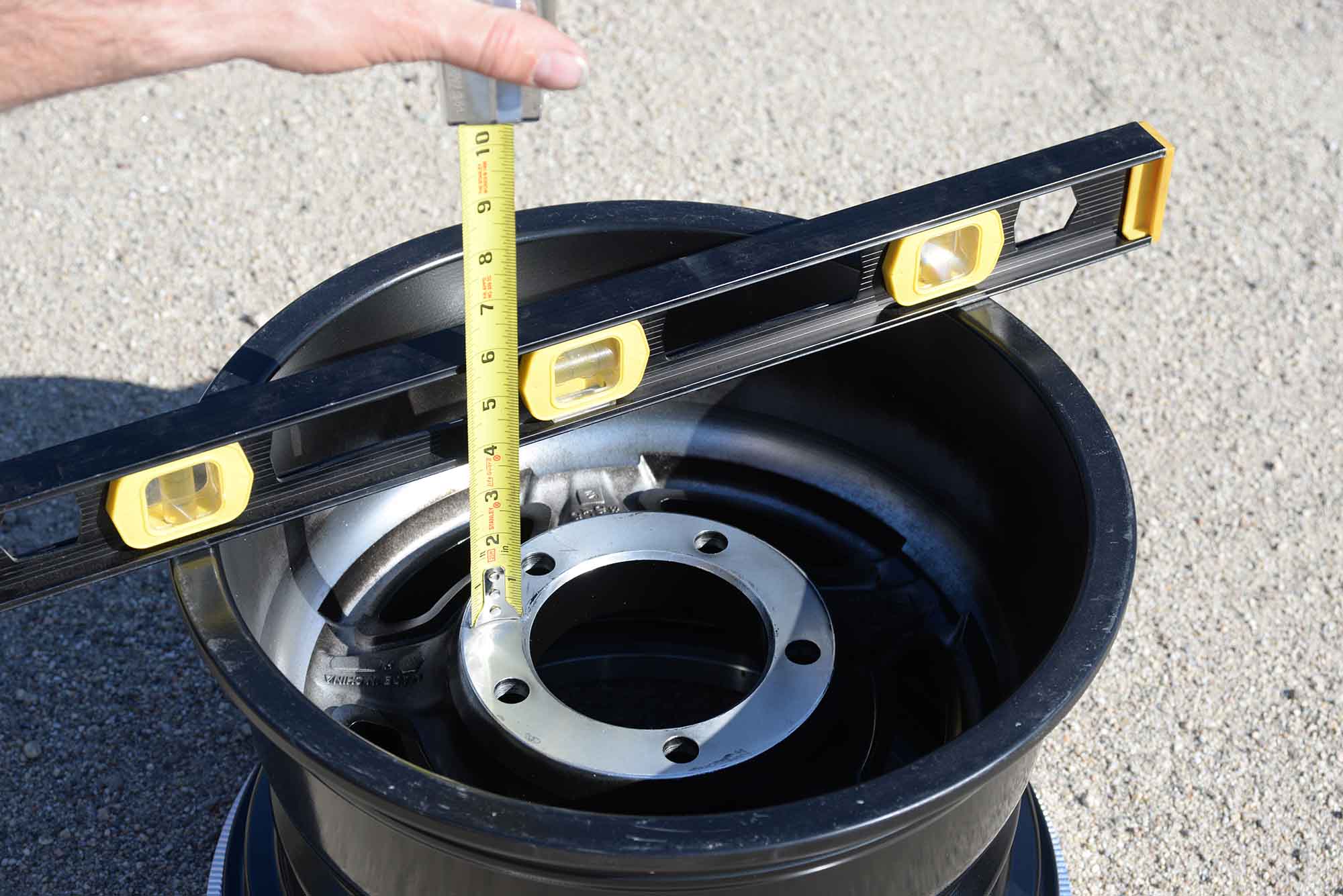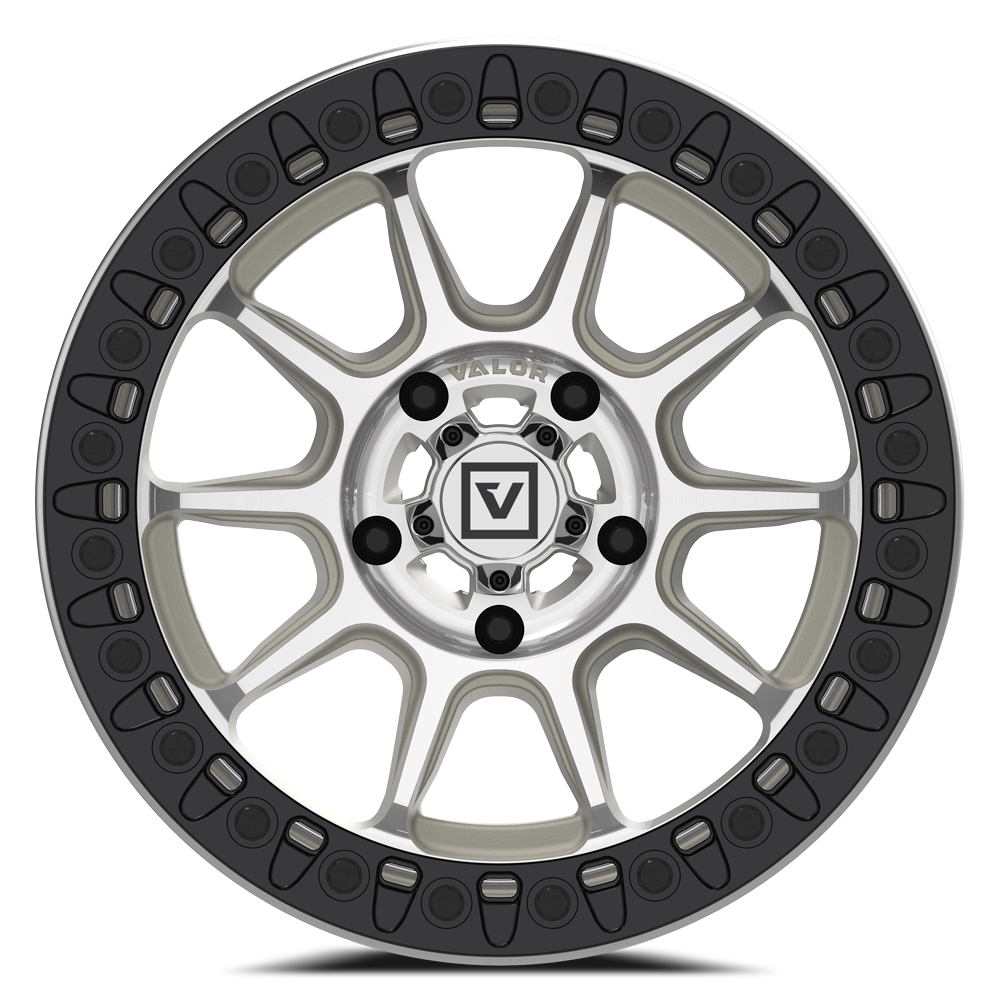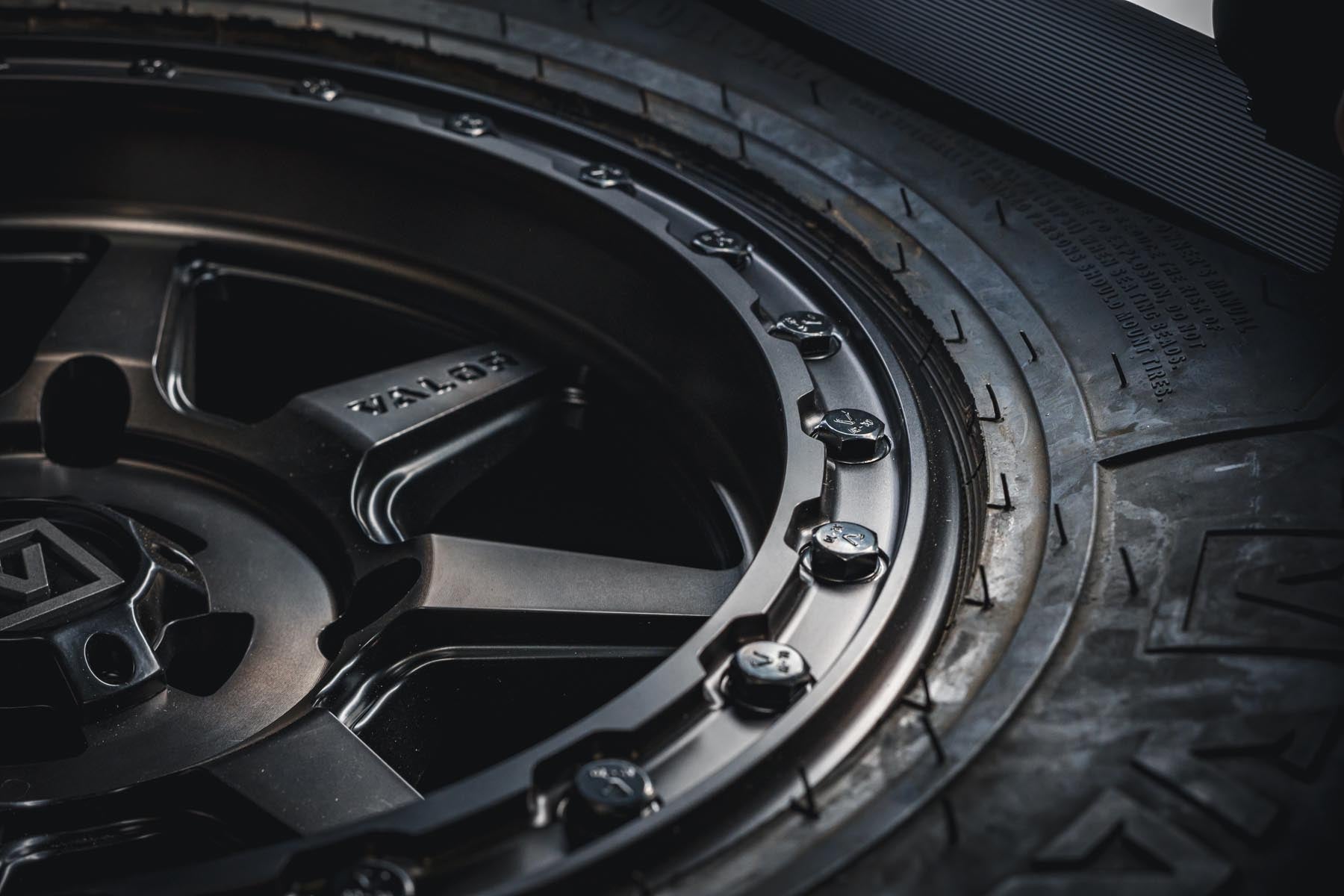
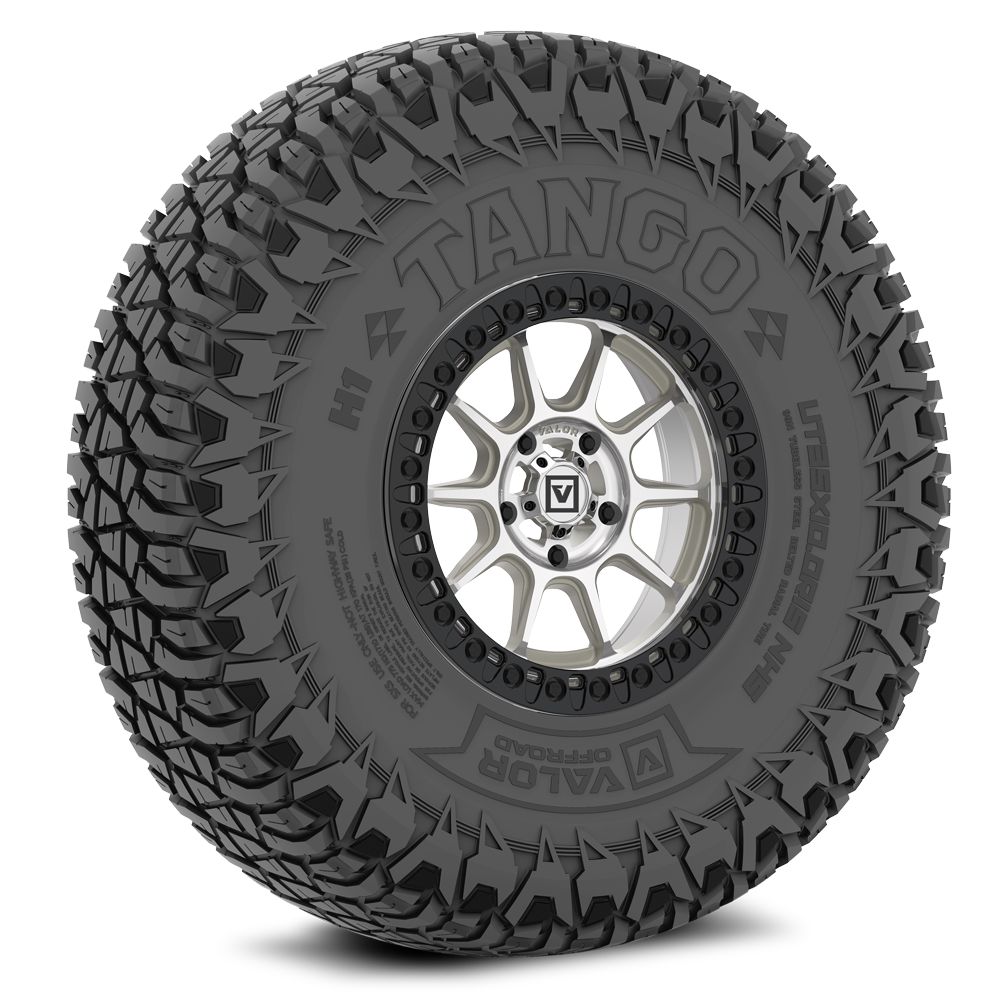



The Tango UTV tire from Valor Offroad is engineered with advanced technology and utilizes segmented molds, a standard practice in the automotive industry. Segmented molds offer distinct advantages over traditional clamshell molds by enabling detailed tread patterns and facilitating the production of high-performance tires for various vehicles. The modular design enhances manufacturing precision, resulting in improved consistency, durability, and overall performance.
Enhanced Precision and Consistency:
- Detailed Tread Patterns: Segmented molds enable manufacturers to produce complex tread designs. These patterns enhance traction, handling, and overall performance, particularly for high-performance UTVs and passenger vehicles.
- Accurate Dimensions: The modular design provides precise control over tire size and shape, resulting in more uniform products. This consistency maintains critical specifications such as diameter, width, and tread performance, while reducing manufacturing defects.
- Improved Balance: Segmented molds prevent tire movement during curing, enhancing balance and minimizing the risk of vibrations or uneven wear.
Increased Durability and Performance:
- Reduced Defects: Segmented molds help prevent defects like air pockets or uneven rubber. This results in more reliable, higher-quality UTV tires.
- Extended Tire Life: Segmented molds promote even wear and maintain tire shape, resulting in increased mileage before replacement is needed.
- Stronger Tread Bond: Segmented molds use high air pressure during curing, helping the tread bond more securely to the casing. This makes the tires less likely to break down over
Specialized Applications:
Segmented molds offer flexibility for manufacturing tires tailored to specific requirements, such as those for sport UTVs. High-performance models, including the Polaris Pro RKawasaki KRX H2, and Can-Am Maverick R, each exceeding 200 horsepower, benefit significantly from this technology.

The Tango UTV Tire incorporates advanced engineering and manufacturing techniques to provide automotive-grade performance and reliability in a lightweight, all-terrain design suitable for UTV, SXS, and ATV. Segmented tire molds represent a significant advancement, delivering superior precision, performance, and durability compared to previous methods. This technology is particularly advantageous for producing tires for a wide range of vehicles, including passenger cars, agricultural equipment, and UTVs.
Additional types of tire molds include the following:
Puzzle Molds: This design stops unwanted rubber from forming during curing and improves the tire’s exterior quality. Gaps between mold segments let internal gases escape. Molds for complex tread patterns are more difficult to make than puzzle molds, and maintaining consistent dimensions can be challenging. Puzzle molds work well for ultra-high-performance passenger cars but are rarely used for UTV tires.
Wave Parting Molds: These molds are produced via 5-axis machining and specialized CAD technology, ensuring precise manufacturing and excellent tire performance and exterior quality. They are particularly effective at preserving complex geometric tread patterns. However, Wave Parting molds are infrequently used for UTV tires.
Steel Engraved Molds: These molds employ advanced 5-axis machining to engrave tread patterns directly into the mold. The use of chromium-enriched steel provides excellent thermal stability, corrosion resistance, and wear resistance. Specialized CAD/CAM systems equipped with sipe blades facilitate the creation of precise tread patterns. Steel-engraved molds are ideal for heavy-duty trucks and earth-moving equipment, but are rarely used for UTV tires.
Aluminum Cast Molds: These molds utilize QC 10 alloys to enhance thermal conductivity and require minimal water lines. The natural oxide layer reduces maintenance needs and eliminates the requirement for additional corrosion protection. Aluminum cast molds are easy to machine, though they require annual repairs due to wear from repeated opening and closing. They are lightweight and provide efficient heat transfer. The majority of UTV tires available on the market are produced using aluminum cast molds.
Retread Molds: These molds are designed for durability and incorporate precise tread designs to vulcanize uncured rubber onto buffed casings. Two primary systems exist: mold cure, in which non-vulcanized rubber is applied directly, and pre-cure, which utilizes pre-vulcanized treads bonded with cushion gum. Retread molds are employed for specialized applications such as recreational vehicles and long-haul trucks, but are not used for UTV tires.